What would it take?

Rob ,I do not get your point about growing caprifigs in a group causing the wasp to fry ? the amount of pollen a wasp transfures needs to only be tiny to get the job done ,and "cooling" seems either a natural function or not neccacary as all wasps that get in a female fig seems to cause all or at least partial caprification .
I think you may have misread what was written there, Caprifigs need to be in shade in the very hot weather, or they will burn in the sun, and the wasps will die.

Unfortunately, if wasps are in a more humid atmosphere outside of the Caprifig, or equal to the same that they left in the Caprifig, no matter how much they came out with, they will not be able to carry any pollen to pollinate your figs. If wasps do not shrink slightly after they leave the Caprifig, the small folds on their bodies will not close over, and the pollen is dropped.
 
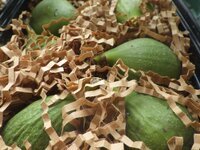
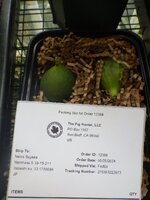
This is off topic, Last year, I successfully two weeks transporting Caprifigs from TFH to Japan. Of course, I used WASP. However, the Caprifig wasn't ready in time, so they didn't take root here in Japan. I intend to try again.
 

Attachments

  • RIMG9693.JPG
    RIMG9693.JPG
    78.3 KB · Views: 2
  • RIMG9709.JPG
    RIMG9709.JPG
    205.1 KB · Views: 2
  • RIMG9713.JPG
    RIMG9713.JPG
    139.9 KB · Views: 2
This is off topic, Last year, I successfully two weeks transporting Caprifigs from TFH to Japan. Of course, I used WASP. However, the Caprifig wasn't ready in time, so they didn't take root here in Japan. I intend to try again.
Timing is very important with this, you may have better luck having them sent from India or Pakistan?
 
I think you may have misread what was written there, Caprifigs need to be in shade in the very hot weather, or they will burn in the sun, and the wasps will die.

Unfortunately, if wasps are in a more humid atmosphere outside of the Caprifig, or equal to the same that they left in the Caprifig, no matter how much they came out with, they will not be able to carry any pollen to pollinate your figs. If wasps do not shrink slightly after they leave the Caprifig, the small folds on their bodies will not close over, and the pollen is dropped.
OK ,went and re read your post ,i did miss read what you were saying about wasp frying .Still never heard about how wasp hold pollen ,seems to me i have seen them discolored for all the pollen they were dusted with ?
 
I see many wasps exiting the Caprifigs completely covered with pollen, and after they clean themselves before flying off, and then when they land on a fig to enter, they all look very clean, but fortunately they are carrying plenty of pollen we don't notice, they are built very well for their purpose. The pdf below does explain most of the pollen carrying, for Ficus Carica.
 

Attachments

I see many wasps exiting the Caprifigs completely covered with pollen, and after they clean themselves before flying off, and then when they land on a fig to enter, they all look very clean, but fortunately they are carrying plenty of pollen we don't notice, they are built very well for their purpose. The pdf below does explain most of the pollen carrying, for Ficus Carica.
THANKS FOR THE PDF ,LEARNED A LOT ! Now i understand what you are getting at ,very interesting !
 
The humidity issue was also mentioned by Condit, so it is a factor to keep in mind.

One point that was not mentioned was having caprifigs that stagger their crops. When you have wasps leaving the profichi, you need to have another set of caprifigs at the right stage for the wasps leaving the old set to enter a new set to lay their eggs. This would need to be for all three crops so that the cycle continues.

If you only have ripe profichi on your trees when you get waspy profichi from elsewhere, they will have no place to go and will fly away and die, outside of any that pollinate your female figs. You’re going to need more than one or two caprifig trees if you want an ongoing population.

If you have any area near you that you can plant a handful of different caprifig trees, it would help you out. So that not only do you have some at your property, but also nearby to supply plenty of opportunities for homes for the wasp.
 
  • Like
Reactions: Rob
Back
Top