
You are using an out of date browser. It may not display this or other websites correctly.
You should upgrade or use an alternative browser.
You should upgrade or use an alternative browser.
Sweet potatoes: what types you growin?
- Thread starter snarfing
- Start date

grasshopper
Well-known member
How were these cooked? Boiled? Steamed? Roasted?Well the 2 potatoes i gave are definately different. Did I post the picture? Raw they looked similar but cooked it was totally different. The Hawaiian skin stayed white and the inside was like tie dye where as Okinawa turned purple everywhere.
You can see it sort of here. The Okinawa was all purple and the Hawaiian is far right. A friend has had good success with Okinawa in Maryland
I don't think the Okinawan changes skin color but it is known to deepen color after cooking so maybe we are talking about the same thing. Where did you get the Okinawan from? The closest source I had was from Japanese stores that get them from Okinawa. I didn't check their original shipping box so I can't be certain. But usually, Japanese are pretty strict about the source of their products.
The Hawaii ones are often marketed as Okinawan as well. I even contacted farmers in Hawaii to see if I can get it directly from them as it is not easy to sprout them after going through irradiation/spray. The Hawaii Okinawan also deepens its purple after cooking and they tasted exactly the same as the one from Okinawa. I have bought some from local farmers which doesn't have much purple to begin with, they won't deepen color because there wasn't much color to begin with.
BTW, these are supposed to come originally from South America so it may have a different name there as well.
grasshopper
Well-known member
Are those white flesh or purple flesh?Our local grocer carried murasaki this last week and those by far have been the best tasting, it’s like a cross of regular potato flavor with sweetness to it

snarfing
Well-known member
bo
The okinawa potatoes skin may have just been dyed from juices. but the inside still became completely solid dark blue purple.
both were cooked next to each other in the oven. One was from A-mart (a local asian store) one was from H-mart (much larger chain which im sure you probably heard of). I am pretty confident at least the one from a-mart was correctly labled. Hmart i think has a tendency to relable things as korean, but im not sure about hawaiian. Either way, they certainly are different potatoes. they tasted different, they look different cooked. I dont know if they look different raw on the inside, i didnt cut them before cooking.How were these cooked? Boiled? Steamed? Roasted?
I don't think the Okinawan changes skin color but it is known to deepen color after cooking so maybe we are talking about the same thing. Where did you get the Okinawan from? The closest source I had was from Japanese stores that get them from Okinawa. I didn't check their original shipping box so I can't be certain. But usually, Japanese are pretty strict about the source of their products.
The Hawaii ones are often marketed as Okinawan as well. I even contacted farmers in Hawaii to see if I can get it directly from them as it is not easy to sprout them after going through irradiation/spray. The Hawaii Okinawan also deepens its purple after cooking and they tasted exactly the same as the one from Okinawa. I have bought some from local farmers which doesn't have much purple to begin with, they won't deepen color because there wasn't much color to begin with.
BTW, these are supposed to come originally from South America so it may have a different name there as well.
The okinawa potatoes skin may have just been dyed from juices. but the inside still became completely solid dark blue purple.

Bofig
Well-known member
They are purple skin white fleshAre those white flesh or purple flesh?
grasshopper
Well-known member
Did you taste the typical chestnut taste that is quite distinct in Okinawan? And they are also more starchy than the typical (purple) sweet potatoes.bo
both were cooked next to each other in the oven. One was from A-mart (a local asian store) one was from H-mart (much larger chain which im sure you probably heard of). I am pretty confident at least the one from a-mart was correctly labled. Hmart i think has a tendency to relable things as korean, but im not sure about hawaiian. Either way, they certainly are different potatoes. they tasted different, they look different cooked. I dont know if they look different raw on the inside, i didnt cut them before cooking.
The okinawa potatoes skin may have just been dyed from juices. but the inside still became completely solid dark blue purple.
Is the A-mart a Japanese grocery store? Where are you located?
I know there is more than one purple sweet potatoes commonly grown in Hawaii as I had tasted a few of them before. e.g. Molokai is even deeper in purple, almost dark in color relative to other purple sweet potatoes.
Most grocery stores clerks tend to label the items based on the origin instead of its true name. If it came from Hawaii, then call it Hawaii purple sweet potato. Japanese stores are a little strict with the place of origin as they do get down to prefecture because a product from one region can be very different in characters in another region. e.g. fish, meat or agricultural products. In Japanese stores, they would list Okinawan either from Hawaii or from Okinawa and they got both. The ones from Okinawa were more expensive but looks and tastes exactly the same as the ones from Hawaii as they do overlap in seasons.
Another thing I do is to check the store's product box in order to confirm their origin. I have asked to see their boxes from their backroom before.
grasshopper
Well-known member
Uh, I have been trying to find the Murasaki with purple flesh. But they are only sold in areas with a large Japanese population or a big Japanese grocery store. I used to grow it years ago but lost that during my move.They are purple skin white flesh
Bofig
Well-known member
I have some purple fleshed and purple skin cuttings I rooted last year in March that are still in the 9 ounce cups they started in lol, you could say it’s a bonsai sweet potatoUh, I have been trying to find the Murasaki with purple flesh. But they are only sold in areas with a large Japanese population or a big Japanese grocery store. I used to grow it years ago but lost that during my move.
snarfing
Well-known member
A-mart's owner is from china. Yongjia County, Zhejiang Province, came here in his 30s. I didnt check this box but im confident they label things correctly after dealing with them for many years.Did you taste the typical chestnut taste that is quite distinct in Okinawan? And they are also more starchy than the typical (purple) sweet potatoes.
Is the A-mart a Japanese grocery store? Where are you located?
I know there is more than one purple sweet potatoes commonly grown in Hawaii as I had tasted a few of them before. e.g. Molokai is even deeper in purple, almost dark in color relative to other purple sweet potatoes.
Most grocery stores clerks tend to label the items based on the origin instead of its true name. If it came from Hawaii, then call it Hawaii purple sweet potato. Japanese stores are a little strict with the place of origin as they do get down to prefecture because a product from one region can be very different in characters in another region. e.g. fish, meat or agricultural products. In Japanese stores, they would list Okinawan either from Hawaii or from Okinawa and they got both. The ones from Okinawa were more expensive but looks and tastes exactly the same as the ones from Hawaii as they do overlap in seasons.
Another thing I do is to check the store's product box in order to confirm their origin. I have asked to see their boxes from their backroom before.
As for H-mart, who knows. The okinawa did have a nice nutty taste. the hawaiian one was strange. neither me or my wife could decide exactly what the flavor was. Something savory? not sure. Im sure the variety name is not hawaiian and it was just from hawaii to be clear. I just dont think it is Okinawan sweet potato.
grasshopper
Well-known member
Ha ha, in a 9oz cup. That saves up space. You can activate it anytime when the weather is warm enough outside. They grow faster than weeds in warm weather.I have some purple fleshed and purple skin cuttings I rooted last year in March that are still in the 9 ounce cups they started in lol, you could say it’s a bonsai sweet potato
Bofig
Well-known member
Oh yeah I’m aware lol, we had some problems with time last spring so they got forgotten. I’ve brought them back from death several times since then lolHa ha, in a 9oz cup. That saves up space. You can activate it anytime when the weather is warm enough outside. They grow faster than weeds in warm weather.
DallasFigShop
Well-known member
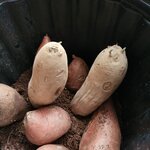
These are the white ones i mentioned that are not Murasaki i found them for cheap at Sprouts. These are only i got that were not labeled Organic. They started sprouting and so they probably were not treated to block eye sprouts
I went to check because of this post... the one on the right was rotted most of the way up... one of the others behind it was enough to get it... the red skinned with orange flesh are delicious but i have the most issues with them rotting ... the rest are much easier.
Not sure if I saved this one, it is the same as above but for some reason this photo makes the skin appear to be more brown
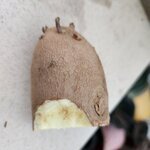
I ate the other two. One was exceptional and even better than Murasaki to my taste. I think even sweeter without the flavor component that Murasaki has, that im not against but I like this one better... the other was regular spud flavor but lightly sweetened, probably to the same level as a Delicata.. and so Im happy with these either way but hopefully they grow out sweeter here
They mostly appeared similar to this one with narrow form
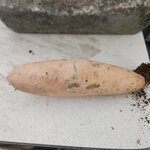
I went to check because of this post... the one on the right was rotted most of the way up... one of the others behind it was enough to get it... the red skinned with orange flesh are delicious but i have the most issues with them rotting ... the rest are much easier.
Not sure if I saved this one, it is the same as above but for some reason this photo makes the skin appear to be more brown
I ate the other two. One was exceptional and even better than Murasaki to my taste. I think even sweeter without the flavor component that Murasaki has, that im not against but I like this one better... the other was regular spud flavor but lightly sweetened, probably to the same level as a Delicata.. and so Im happy with these either way but hopefully they grow out sweeter here
They mostly appeared similar to this one with narrow form
Last edited:
grasshopper
Well-known member
If it has the unique taste and look, then it is likely to be the true okinawan. Sounds like you know the owner. Perhaps you can ask him about the origin next time. Wherever it is, it has probably come from a region with volcanic soil.A-mart's owner is from china. Yongjia County, Zhejiang Province, came here in his 30s. I didnt check this box but im confident they label things correctly after dealing with them for many years.
As for H-mart, who knows. The okinawa did have a nice nutty taste. the hawaiian one was strange. neither me or my wife could decide exactly what the flavor was. Something savory? not sure. Im sure the variety name is not hawaiian and it was just from hawaii to be clear. I just dont think it is Okinawan sweet potato.
BTW, when I started this discussion, I was referring to Sand Hill's two listings, Hawaii and Okinawa being the same, not grocery stocks. Because I don't think Hawaii have a purple sweet potato by its name.

snarfing
Well-known member
yes i dont know about those i simply meant how these were described.If it has the unique taste and look, then it is likely to be the true okinawan. Sounds like you know the owner. Perhaps you can ask him about the origin next time. Wherever it is, it has probably come from a region with volcanic soil.
BTW, when I started this discussion, I was referring to Sand Hill's two listings, Hawaii and Okinawa being the same, not grocery stocks. Because I don't think Hawaii have a purple sweet potato by its name.
I dont know him well but you know me... i'm very chatty.
DallasFigShop
Well-known member
Im starting regular blues also. I believe these are Adirondack but not sure ... looks like i get a few bowls full in the springtime ...
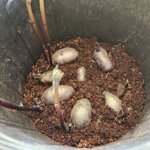
Another pot fully that started earlier and some blue sweet potato starts over to the right
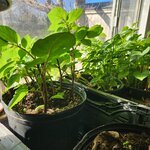
Another pot fully that started earlier and some blue sweet potato starts over to the right
grasshopper
Well-known member
Grocery stocks don't always sprout, or the sprouts may not grow well. So, you may need to add a little time for plan B or delay. On the other hand, you can have slips ready way before last frost and just keep them inside as house plants for a bit. I left mine in the garage to avoid extreme cold.how early do you think i ought to start them for a mid april last frost
I remember I ran into that in my first season so I ended up planting late, which was ok because I had a long season.

MyFigStix
Active member
I grew two different purple sweet potatoes from purchased slips last year. One had white interior and the other orange interior. The white interior was bland and lacks flavor. The orange interior was pretty good but not sweet. I also started my own slips from organic orange sweet potatoes from Walmart. These were our favorite! Super sweet. I am going all in with these again this year. However it took forever to get them to slip last year. I feel like I should have already started trying to get slips. 

GoneWithTheFig
Well-known member
I haven't tried the Japanese ones, because honestly the Korean ones are so good I've never thought to stray from them. Although Korea and Japan have several varieties (and from what I've heard they are similar), my Japanese friend also prefers the Korean variety from the ones sold in the US. The most common Korean variety sold in the US are bam goguma (meaning chestnut sweet potato). Sweet, nutty and of course taste like roasted chestnuts. Bake at 400 for a little over 1 hr and the caramelization on them is amazing, and even better the next day!Had a bit of a taste test with 2 grocery stores stock. Korean was the stand out, way nicer than the japanese one. Like a marshmamllow
Kept waffling on if Okinawa or Hawaiian was better. Which also surprised me at being different.
Last edited: