Now What?

Since I worked in a school, mice were a problem while it was closed. If you decide to leave them there, set up some mouse traps.
The teacher down the hall from me had mouse problems. She kept candy in her desk and cabinets. I don't keep food, but those fig plants smell good to me.

I'm going to start bringing them home tomorrow.
 
I see your point. I can easily hang a couple of shop lights above them. Dragging home the heating mat will not be difficult either. Right now my basement is 63°. Do you think I could get away without the heating mat?

63f is on the cool side. I don't think it'll hurt them but it'll slow growth. Do you have a furnace down there? Something warm to sit it next to? I start seeds for my hydroponics on my water heater.
 
63f is on the cool side. I don't think it'll hurt them but it'll slow growth. Do you have a furnace down there? Something warm to sit it next to? I start seeds for my hydroponics on my water heater.
I have a furnace, but my wife loves to burn the woodstove upstairs so it seldom runs. I'll bring home the heating mat.
 
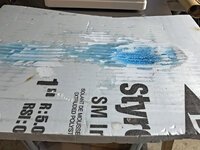
Ok, I gave away 13 figs today to fellow teachers and then brought the rest home along with the heating mat. I put them on a piece of 2" foam on a folding table in the basement with the heating mat set to 73. I used a syringe to give them all 30 ml of water. The water was infused with Mosquito Bits, and 1/8 teaspoon of Miracle Grow fertilizer was added.

Now to hover over them for the next two weeks...
 
Ok, I gave away 13 figs today to fellow teachers and then brought the rest home along with the heating mat. I put them on a piece of 2" foam on a folding table in the basement with the heating mat set to 73. I used a syringe to give them all 30 ml of water. The water was infused with Mosquito Bits, and 1/8 teaspoon of Miracle Grow fertilizer was added.

Now to hover over them for the next two weeks...

I would put some cardboard between the foam and the mat's they can create hot spots away from the temp sensor and do bad things with the plastic. I worried about toxic fumes. I learned the hard way. You should include a buffer.

foam.jpg
 
Depending on the rooting medium you are using, I watered mine rooted cuttings on Tuesdays and Fridays. I give them full strength of soluble fertilizer and it has not burn my roots, I mistakenly gave my rooted cuttings full strength soluble fertilizer and I was expecting it to burn the roots instead the roots are growing more and more. That's mine experience and experience is the best teacher.
 
If you give it some water and put the pot in a produce bag, it will stay moist just fine. I do most of my cuttings like this and no water is needed for at least 6 weeks.
 
I would put some cardboard between the foam and the mat's they can create hot spots away from the temp sensor and do bad things with the plastic. I worried about toxic fumes. I learned the hard way. You should include a buffer.
That was a close one. I'll put a piece of plywood under the heat mat.
 
Depending on the rooting medium you are using, I watered mine rooted cuttings on Tuesdays and Fridays. I give them full strength of soluble fertilizer and it has not burn my roots, I mistakenly gave my rooted cuttings full strength soluble fertilizer and I was expecting it to burn the roots instead the roots are growing more and more. That's mine experience and experience is the best teacher.
I'm using 3 parts peat, 1 part pumice, 2 parts DE. It's always interesting to me how so many growers can get good results doing different things.
 
If you give it some water and put the pot in a produce bag, it will stay moist just fine. I do most of my cuttings like this and no water is needed for at least 6 weeks.
I'm at the 6 week mark right now. Here is how it started. I tied the bag to the cutting at about 3 weeks and it's been on ever since.
 

Attachments

  • CL Start on Mats.jpg
    CL Start on Mats.jpg
    118.4 KB · Views: 13
That was a close one. I'll put a piece of plywood under the heat mat.

If you can find a quality heat mat made by n North America or Europe I wouldn’t worry… but for the most part, what’s out there needs to be monitored carefully.

1/4 inch plywood is plenty. Even 2 layers of cardboard with no plastic is good. That’s what I use now. It just needs a buffer form the cheap, inconsistent design
 
This is INCREDIBLE! @ohiobruce

What if we got this in into the hands of teachers and homeschools all over? We need some model materials for them, something that is incorporated into the model core curriculum.

In most states that align with the Next Generation Science Standards (NGSS), which serve as a model for core science curricula nationwide, the topic of rooting plant cuttings (a form of asexual reproduction or vegetative propagation) falls under middle school life science. This is typically in grades 6-8, with many classroom lessons and activities targeting 7th grade specifically.


It aligns with standards like:


  • MS-LS1-4: Using evidence to explain how plant structures and behaviors support successful reproduction, including various methods beyond seeds (e.g., cuttings).
  • MS-LS3-2: Modeling why asexual reproduction results in genetically identical offspring, where plant cuttings serve as a common example.

Woody plant cuttings are a specific subtype of stem cuttings, often used in hands-on labs to demonstrate these concepts, as they illustrate cloning and trait inheritance without genetic variation. In states with their own standards (e.g., California or New York), it's similarly placed in middle school biology units on organism growth, development, and heredity.

 
I would put some cardboard between the foam and the mat's they can create hot spots away from the temp sensor and do bad things with the plastic. I worried about toxic fumes. I learned the hard way. You should include a buffer.

View attachment 16894

Yes. Be incredibly careful with heaters - please. Most say do not leave unattended.

I'm so paranoid now I'm going to build a concrete block building for all my rooting :(
 
Since I worked in a school, mice were a problem while it was closed. If you decide to leave them there, set up some mouse traps.
Ooooh, yes. Rats will eat your plants! They will gnaw them right to the ground. Eat the shoots and bark OFF! I have photos.

And right now is the time. I was telling Jack today we to get the rat traps set.

We use those big Victor spring traps still, but you need the ones with the metal trigger plate so you can adjust it to a hair trigger. Then tie tender bacon on with dental floss. I catch many rats every year. If you think you don't have rats around, you just don't see them. They are smart and sneaky.

The live traps work well also, get the smaller ones the plate trips easier and tie the bait (usually a chicken leg bone) with string to the end of the trap. You can find those traps at Tractor Supply, Atwoods or online - HavaHart I think is a popular brand.

And while you're at there #4 hardware cloth is the size of wire you need to keep out mice and rats. Fasten over any possible openings around the outside of your house. I just replaced all the access covers to my crawlspace. Now the cat is looking for another way to break in.
 
Last edited:
This is INCREDIBLE! @ohiobruce

What if we got this in into the hands of teachers and homeschools all over? We need some model materials for them, something that is incorporated into the model core curriculum.

In most states that align with the Next Generation Science Standards (NGSS), which serve as a model for core science curricula nationwide, the topic of rooting plant cuttings (a form of asexual reproduction or vegetative propagation) falls under middle school life science. This is typically in grades 6-8, with many classroom lessons and activities targeting 7th grade specifically.


It aligns with standards like:


  • MS-LS1-4: Using evidence to explain how plant structures and behaviors support successful reproduction, including various methods beyond seeds (e.g., cuttings).
  • MS-LS3-2: Modeling why asexual reproduction results in genetically identical offspring, where plant cuttings serve as a common example.

Woody plant cuttings are a specific subtype of stem cuttings, often used in hands-on labs to demonstrate these concepts, as they illustrate cloning and trait inheritance without genetic variation. In states with their own standards (e.g., California or New York), it's similarly placed in middle school biology units on organism growth, development, and heredity.

Thanks. We've spent the last two decades in education incorporating technology into the classroom, but it's been waaaay overdone. Time now to return to hands-on projects that give the students some life skills while teaching them something.

The biggest factor in running a successful project is to have someone enthusiastic and knowledgeable (or willing to get that knowledge).

So if a person wanted to introduce this to a classroom they would need to supply: cups, bags, mix, cuttings, fertilizer, heat mat and controller, grow light, and a frame to suspend the grow light. Maybe if you could do away with the heat mat if you waited until late spring. And a south-facing window might replace the grow light?

Sounds like a need to push a table up to the south-facing window in the science lab and pot some cuttings next April...
 
Yes - too much screen time.

>The biggest factor in running a successful project is to have someone enthusiastic and knowledgeable (or willing to get that knowledge).

Yes. Maybe right out of college while they are still eager. I spent a good bit of time teaching science in public schools w/GK-12 NSF program.

I used to sell a kits on ebay that included the following: cups, bags, mix, cuttings, fertilizer, and a basic printed rooting guide. As you mentioned, the heat mat could be optional and a south facing window is perfect for rooting cuttings.

And the end game is to send them home to be potted up after 90 days? (That's our usual rule of thumb for up potting, of course it varies).
 
Back
Top