Fertilizer for so many different plants

Smokymist

Well-known member
Ok so I admit, I barely ever feed my plants, none of them. From dragon fruit, to all kinds of fruit trees, to tropicals.

Today I went to buy my lamberts soil, which I am currently loving and buy by the bale, and I asked the store owner, is there a good all natural fertilizer ? He laughed like he'd been asked that question a million times.

There are NO good organic fertilizers. Well isn't organic and natural the sane thing ?

So I need something as a bloom booster, for my brugmansias, dragon fruit etc, and Ineed something for all of my figs, poms, and other fruit.

I can't spend a fortune...please tell me what you use ?

Cheryl
 
Just my opinion. Doing things the organic way is best for inground plants/trees. For potted plants/trees. Using regular fertilizer, you buy at the store is cheaper and more effective. I am now using 13-13-13 and M.grow.
Not sure what to use for the dragons fruit. Cacti have different needs.
 
Just my opinion. Doing things the organic way is best for inground plants/trees. For potted plants/trees. Using regular fertilizer, you buy at the store is cheaper and more effective. I am now using 13-13-13 and M.grow.
Not sure what to use for the dragons fruit. Cacti have different needs.
I sell extras, and some of my customers will ask me is it organic ? LOL. Well up until this point I can say yes.
 
Those attached to conventional fertilization often have negative viewpoints on organic fertilizers in my experience, and this is despite them never ever having done any research on organics whatsoever. They are influenced by marketing, other conventional supporters, and concepts they were raised with. And I say this because the research is actually out there and shows that organic is superior for soil and plant health. In general, the commercial world supports conventional fertilization and growing practices because that is what makes money and so there will never be a concrete answer or agreement amongst growers because someone is always influenced by something else.

Organic or natural requires a different mindset from conventional, and organic and natural are not the same. “Organic” is a registered term where entities tell you what chemicals you can use in growing. Usually these chemicals are less toxic than what is allowed for conventional growing.

“Natural” growing is not a registered term, and anyone can use it even if they don’t use natural growing methods. But for those into truly natural growing, it usually means no chemical inputs at all.

The numbers on chemical fertilizers, such as 20-20-20, only apply to chemical fertilizers because it requires a pure product to be able to regularly measure a quantifiable number. For example, lemons have natural vitamin C, but the amount per lemon will fluctuate and the amount will vary per the stage of growth and ripening. Whereas ascorbic acid, the chemically pure version, can be measured by the amount added to something. The type of vitamin C in a lemon is also in a different form than ascorbic acid, so the two, while having a relationship, are not the same. So they cannot be measured in the same way. The same is true with natural fertilizers vs chemical. This is why some conventional growers criticize natural inputs, they are looking for those numbers as some sort of reassurance of what is in the product. But natural fertilizers work in a different way and are in a different form than the chemical inputs, so they cannot be measured in the same way.

Natural growing requires tending to soil health which in turn contributes to plant health. It creates a harmonious system of sustainability. Natural growing is about the long game. Whereas chemical fertilizers only mostly focus on NPK, fast growth, and green color. Conventional growing is not about soil or plant health, but artificial management to give an appearance of health.

So it’s a matter of choosing which route you want to go. You can do one or the other, or a sort of combo.

Most plants do not need bloom boost. It is solely a marketing term. Many bloom boost products have very high levels of phosphorus in a form that plants can’t actually use, it is toxic to the soil and to waterways. So even if you prefer conventional, I would always avoid bloom boost products. Also, figs do not require that amount of phosphorus.

You can fertilize dragon fruit and figs exactly the same. I am a natural grower and so I recommend seaweed, fish emulsion, and worm castings or compost. For figs, I recommend mineral inputs, especially calcium. So I would give potted figs a mix of gypsum and high calcium lime (not dolomite.)
 
Last edited:
There are NO good organic fertilizers
I use NOP-rated products when they are the best choice for the intended purpose. For example, Norwegian Kelp extract as a source of Gibberellin. It is helpful to notice that "organic" is a marketing label regulated by the USDA. "Organic" fertilizers generally cause you to feel (emotionally) better about the use of the product in comparison to any benefits the plant receives. This often occurs at a premium price. Review the chemistry. Do the math. You'll see that the vast majority of "organic" fertilizers supply less nutrients than their concentrated counterparts.

I need something as a bloom booster, for my brugmansias, dragon fruit etc,
Not for your dragon fruit. This will have poor results.

I need something for all of my figs, poms, and other fruit
I recommend products with NPK ratios of 3:1:2, for example NPK 15-5-10 or 9-3-6. Follow the label for dosage instructions.
 
Ok so I admit, I barely ever feed my plants, none of them. From dragon fruit, to all kinds of fruit trees, to tropicals.

Today I went to buy my lamberts soil, which I am currently loving and buy by the bale, and I asked the store owner, is there a good all natural fertilizer ? He laughed like he'd been asked that question a million times.

There are NO good organic fertilizers. Well isn't organic and natural the sane thing ?

So I need something as a bloom booster, for my brugmansias, dragon fruit etc, and Ineed something for all of my figs, poms, and other fruit.

I can't spend a fortune...please tell me what you use ?

Cheryl
In pots when up potted I add balanced organic like 5-4-4 plus bone meal for root growth. After I use osmocoat plus then add Jacks 20-20-20 every 2 weeks.
 
3-1-2 seems to be the magic number.

I'm not specifically against certified organic but I do believe it's obscenely overpriced.

One fert that I'm loving the last few years, and it has so many micros is this...


It's like $18 here for an 11kg (25lb) bag of 5-3-2 and it's outstanding. Only thing is I'm not sure if they sell it in the US

Maybe something like this


But the stuff isn't too hard to find.

If you need liquid, Alaska Fish is always a good option. Albeit a bit smelly...
 
3-1-2 seems to be the magic number.

I'm not specifically against certified organic but I do believe it's obscenely overpriced.

One fert that I'm loving the last few years, and it has so many micros is this...


It's like $18 here for an 11kg (25lb) bag of 5-3-2 and it's outstanding. Only thing is I'm not sure if they sell it in the US

Maybe something like this


But the stuff isn't too hard to find.

If you need liquid, Alaska Fish is always a good option. Albeit a bit smelly...
Espoma makes one I’ve been using this year some.

 
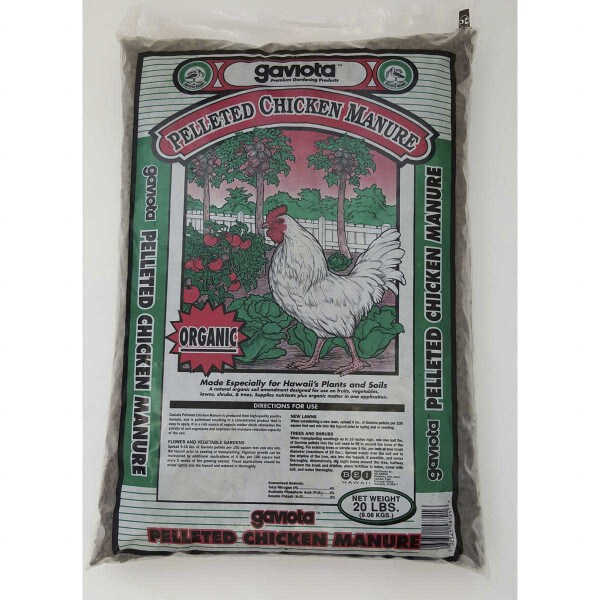
Chicken poop....especially if the chickens are grazers.
I do believe there have been studies done with MG and the like...water soluble fertilizers with results showing they are not harmful.
There have been discussions on it, a bit of research can go a long way.
 
Chicken poop....especially if the chickens are grazers.
I do believe there have been studies done with MG and the like...water soluble fertilizers with results showing they are not harmful.
There have been discussions on it, a bit of research can go a long way.
I did a bit of research, which confused the heck out of me, so I thought I'd ask you all, whom I consider experts.
 
I did a bit of research, which confused the heck out of me, so I thought I'd ask you all, whom I consider experts.
So here is the gist of it, water soluble ferts are designed to be immediately available to the plants, BUT...used as diected.
Over stauration or excesive use can lead to salt build up in the soil, fertilizer burn on your plants, or run off that can lead to excesive algae in bodies of water.
Just use them as directed and everything should be fine. :)
 
@TorontoJoe , @superdave336
An NPK of 5-3-2 is short on potash, and in relation to potash is too high in phosphate. The latter is going to bind nutrients in your soil -- including Calcium.
water soluble ferts are designed to be immediately available to the plants
It depends. Certainly it can happen faster than many "organic" meals. In particular, some forms of nitrogen can take a week or two before assimilated by plant roots, and some micronutrient chelates can take a week when applied to the plant soil. The same chelates can be absorbed by the plant within a few hours of foliar application. Note that the dosages for soil and foliar application are often different.
Just use them as directed
Exactly! I have seen online demostrations proporting to demonstrate that a water-soluble fertilizer powder kills soil microbes. In the demonstration, a tablespoon of a common fertilizer powder is dumped on petri dish of soil with microbes. Of course, the microbes are dead within an hour. However, when a teaspoon of the powder is dissolved in a gallon of water (as directed) and a tablespoon of this dilution were applied to the petri dish, the microbes would thrive.
 
I like the convenience of all purpose granular fertilizers for my ornamentals because mixing up water solubles take too much time when I am trying to avoid being eaten alive by mosquitos. If you prefer the organic type, look to see if it has the micro and macro nutrients. I thought Citrus Tone was complete until I did some label comparisons.
 
Exactly! I have seen online demostrations proporting to demonstrate that a water-soluble fertilizer powder kills soil microbes. In the demonstration, a tablespoon of a common fertilizer powder is dumped on petri dish of soil with microbes. Of course, the microbes are dead within an hour. However, when a teaspoon of the powder is dissolved in a gallon of water (as directed) and a tablespoon of this dilution were applied to the petri dish, the microbes would thrive.
Yeah...years ago I believed that to be true as well.
One of the reasons I started using fish fertilizer and other like items or re-introduce microbes into the soil.
But, some research is always key when ones ignorance is present....in which mine was at that time. :)
I don't use it any longer...I merely follow the directions, trees are happy.
 
I like the convenience of all purpose granular fertilizers for my ornamentals because mixing up water solubles take too much time when I am trying to avoid being eaten alive by mosquitos. If you prefer the organic type, look to see if it has the micro and macro nutrients. I thought Citrus Tone was complete until I did some label comparisons.
Fertigation.
 
@Charlie Dodgson I agree the ratios are a bit off. In most “organic” products this is going to be the case as they can’t dial it right in. I’m surprised they label an NPK at all. Many don’t as they can’t really control it. Personally I like it and it seems to condition the soil nicely…. But the bulk of my feeding over the year comes from soluble through the drip system. That’s a mix of a few things like Plant Prod 20-20-20 (I know) with assed calcium nitrate and Alaska fish.

The closest they have is this. I was thinking I could boost the N with the calcium nitrate to try and get it closer to a 30-10-20. Maybe use Alaska fish as well.

Could you please clarify what you wrote about binding nutrients? Did you mean the calcium does this? Even if soluble?
 
Back
Top